


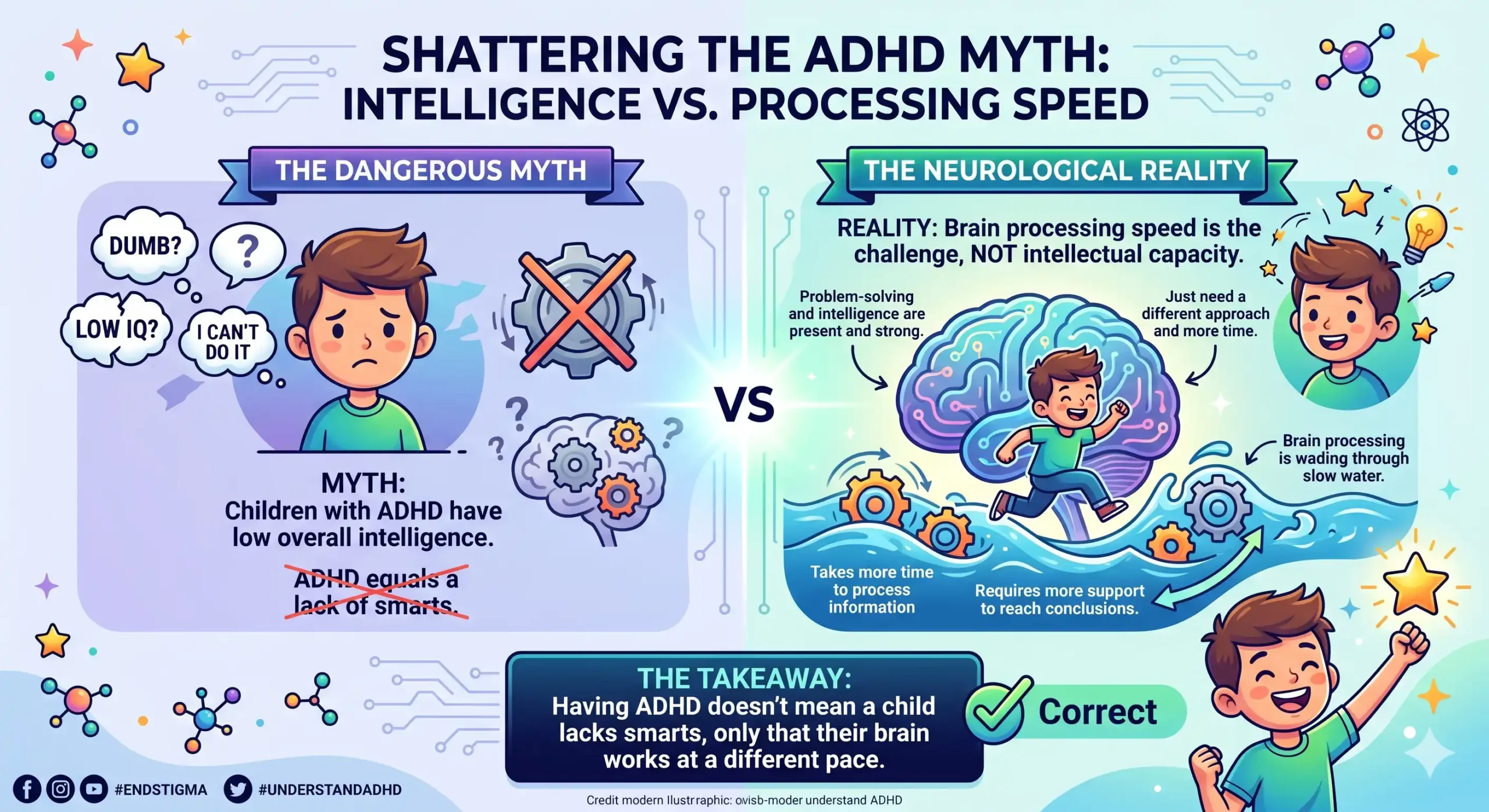
When discussing Attention-Deficit/Hyperactivity Disorder (ADHD) in children, there is a pervasive and incredibly harmful myth that urgently needs to be shattered: the misconception that children with ADHD are somehow “dumb” or inherently possess a lower IQ. Let’s clear the air immediately—this is absolutely not the reality. Having ADHD does not equate to a low capacity for problem-solving, nor does it mean a child lacks intelligence.
So, what is actually happening in the brain of a child with ADHD? Instead of a deficit in overall intelligence, the challenge is often rooted in information processing speed. Imagine the brain trying to process incoming information by wading through slow water. These children often know exactly what they are doing, and their intellectual capacity is entirely present. However, navigating that “slow water” means that they simply need a little bit more time and support to reach the final conclusion.
Understanding this vital distinction between raw intelligence and processing speed changes the entire narrative around the condition. When a child takes longer to complete a classroom task, follow a multi-step instruction, or solve a problem, it is rarely because they don’t understand the core concepts. They are merely working through their unique cognitive pathways. Recognizing this reality is the first crucial step in providing the right kind of environment for them to thrive.
Because their brains process the world differently, children with ADHD require a different kind of support system. They need patience, deep understanding, and a tailored approach to daily learning. This is precisely why it is profoundly important to educate the educators. School teachers, parents, and caregivers must be thoroughly equipped with the right tools and strategies to help these children succeed. You cannot force a child with ADHD into a traditional, rigid learning mold; you have to work with them in a different, more accommodating way that honors their specific processing needs.