


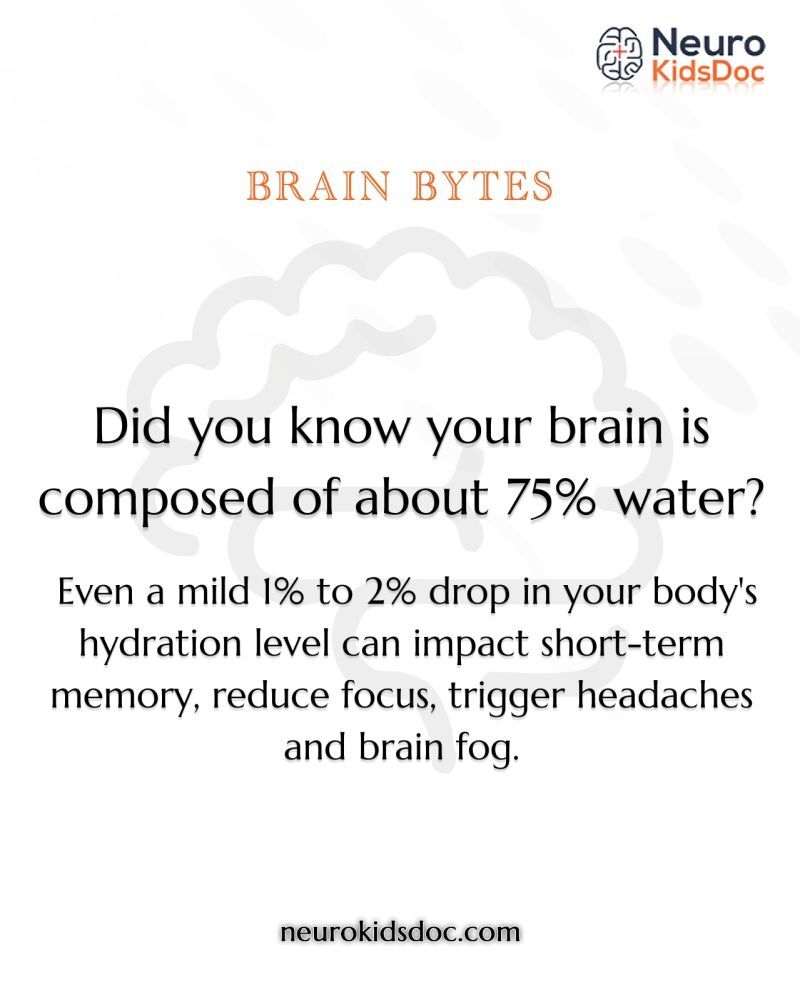
Research shows that losing just 1–2% of your body’s water may reduce attention, slow thinking, make it harder to concentrate, and even affect short-term memory.
Many people describe this as feeling “foggy” or mentally tired.
One reason is that the brain has to work harder to perform everyday tasks when it doesn’t have the hydration it needs.
Hydration is especially important for the hippocampus, a region of the brain that plays a key role in learning and memory. When the body is well hydrated, brain cells communicate more efficiently, supporting attention, memory formation, and cognitive performance.
This is particularly important for children, who may not always recognise when they’re thirsty, especially during school, sports, or outdoor play.
A few simple reminders can make a difference:
– Encourage children to drink water regularly throughout the day, not just when they feel thirsty.
– Pack a water bottle for school and activities.
– Increase fluids during hot weather, exercise, or illness.
Sometimes, supporting brain health starts with one of the simplest habits of all: drinking enough water.
FAQ
1.Can dehydration affect a child’s brain?
Yes. Even mild dehydration can reduce attention, slow thinking, and affect short-term memory and concentration.
2. How does water improve brain function?
Water helps brain cells communicate efficiently, supports blood flow to the brain, and improves attention, learning, and memory.
3.How much water should children drink each day?
Daily water needs vary by age, activity level, and climate, but children should drink water regularly throughout the day, especially during exercise and hot weather.
Why is hydration important during school?
Good hydration helps children stay alert, concentrate better, retain information, and perform more effectively in the classroom.