


Did You Know?
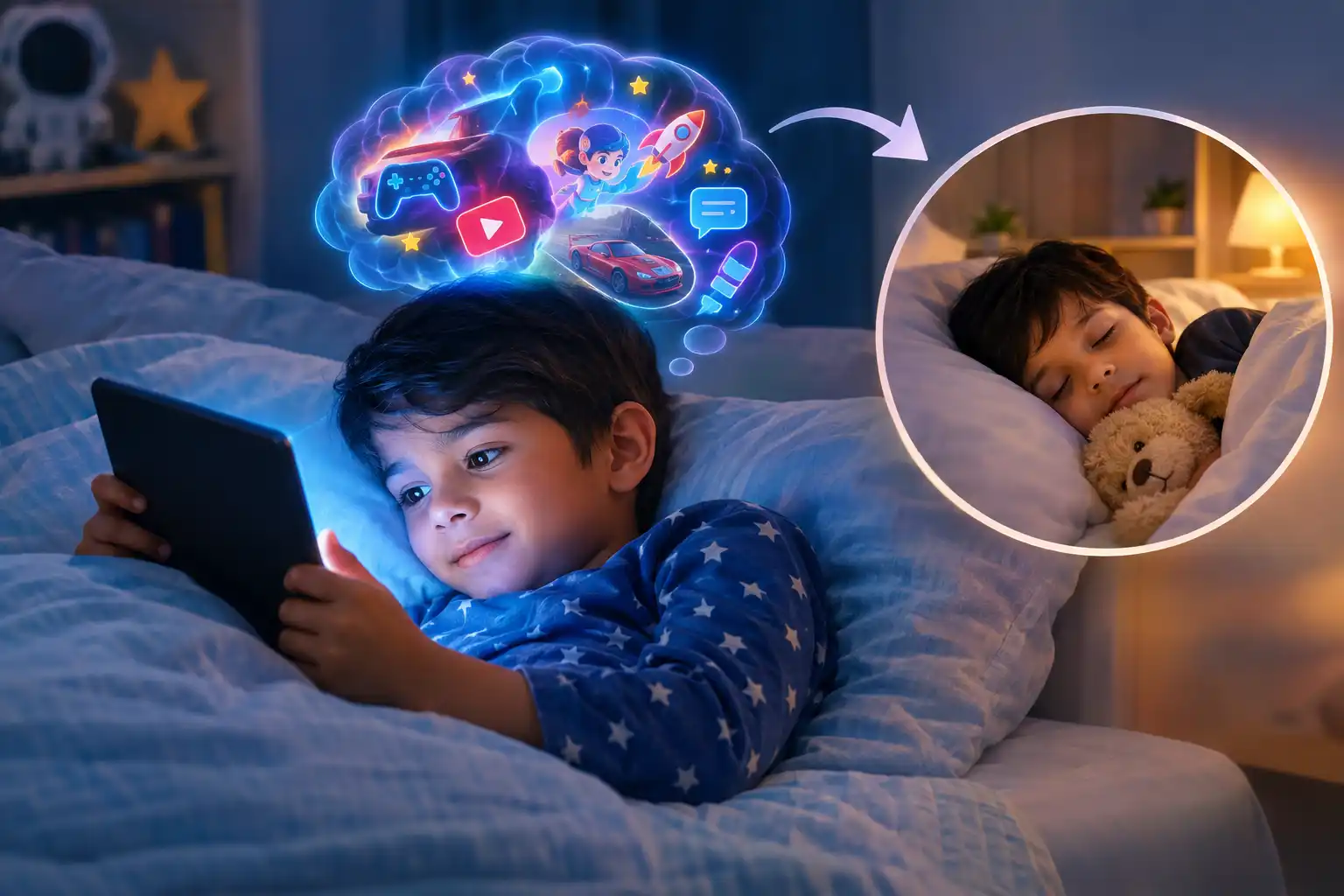
A child may find it harder to settle down for sleep after using a phone, tablet, or other screen close to bedtime.
Screen use is not just about the light from the device. The videos, games, conversations, notifications, and stories a child experiences can keep their mind active even after the device is switched off.
Dr. Aman recommends stopping screen use around 30 minutes before bedtime to give the child’s brain time to wind down.
For some children, stimulating content close to bedtime may contribute to:
- Difficulty falling asleep
- Taking longer to settle in bed
- An active or restless mind
- Trouble maintaining a calm bedtime routine
- Disturbing or vivid dreams in some children
- Wanting to continue using the device instead of going to sleep
A Real-Time Scenario
8:30 PM:
Your child is watching a fast-paced cartoon on a tablet.
8:50 PM:
You ask them to stop and get ready for bed.
9:00 PM:
The tablet is put away, but your child is still talking about the characters, scenes, or game.
9:15 PM:
Your child is in bed but keeps asking questions, moving around, or saying, “I can’t sleep.”
What happened?
The screen was switched off, but the child’s brain may still be processing the stimulating content.
This is why creating a 30-minute screen-free period before bedtime can help provide a calmer transition from screen activity to sleep.
What Can Parents Do Instead?
Try replacing the last 30 minutes of screen time with calming activities.
1.Read a Story
A short bedtime story can help create a predictable and relaxing routine.
2.Quiet Play
Choose simple activities that do not involve screens or intense stimulation.
3.Talk About the Day
Ask your child about something they enjoyed or learned that day.
4.Calm Music
Soft, relaxing music can become part of a consistent bedtime routine.
5.Keep the Routine Predictable
Going through the same sequence each night—bath, brushing teeth, story, bed—can help children understand that bedtime is approaching.
When Parents Should Pay Attention
Occasional difficulty falling asleep is common. But if your child regularly struggles with sleep, wakes frequently, has persistent nightmares, snores heavily, or has significant daytime sleepiness or behavioural changes, it is worth discussing the concern with a healthcare professional.
A child neurologist can assess sleep-related concerns when there are associated neurological or developmental symptoms and help determine whether further evaluation is needed.
Frequently Asked Questions
1.Should children use phones before bedtime?
It is generally better to avoid screen use close to bedtime. Dr. Aman recommends stopping screen use around 30 minutes before bedtime to allow the child to transition into a calmer routine.
2.Why does my child struggle to sleep after using a phone?
Screen content can keep a child’s mind active. Exciting videos, games, conversations, or stories may make it harder for some children to settle down immediately after screen use.
3.My child says they cannot sleep without watching something. What can I do?
Try gradually replacing the screen with another predictable activity, such as reading a short story or listening to calm music. Keeping the same routine each night can make the transition easier.