


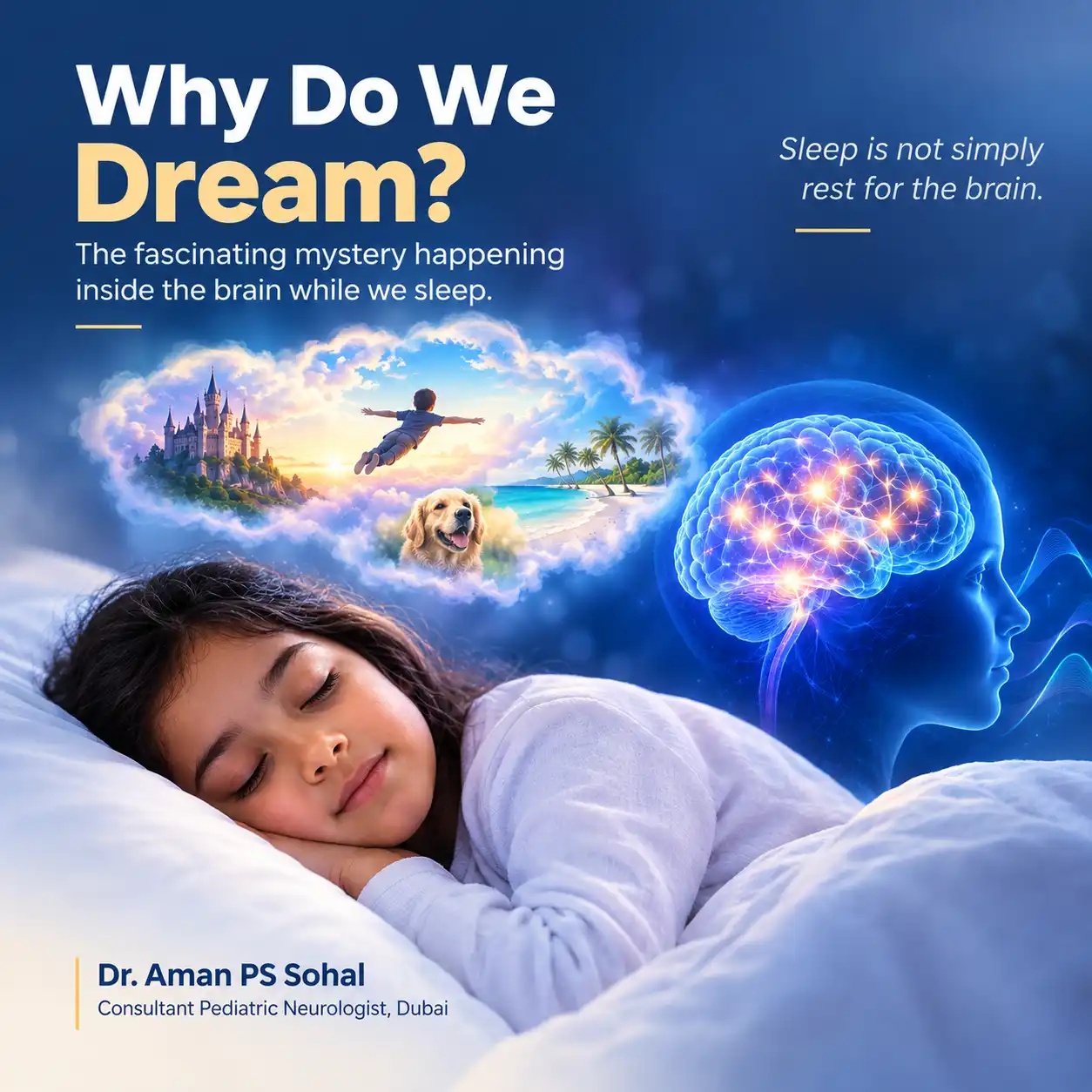
Dreaming is a normal part of sleep. Even when children are sleeping, their brains remain active — processing experiences, supporting memory and moving through different stages of sleep. Dreams are especially common and often more vivid during REM sleep.
There is no single proven explanation for why we dream. Dreams may be linked to memory, learning and emotional processing, while the brain may also be trying to organise its activity during sleep.
Nightmares or Night Terrors?
They are not the same.
Nightmares:
A child usually wakes up and may remember part of the dream.
Night Terrors:
A child may cry, appear frightened or sit up while still partly asleep, but usually has little or no memory of the episode the next morning.
When should parents seek help?
If nightmares become frequent, regularly disturb your child’s sleep, cause significant daytime distress, or begin after a particularly upsetting experience, it is worth discussing them with a doctor or mental health professional.
For most children, a consistent bedtime routine, adequate sleep, a comfortable sleep environment and reassurance after a bad dream can be helpful.
Remember: Sleep is not simply rest for the brain — the brain continues to work while we sleep.