


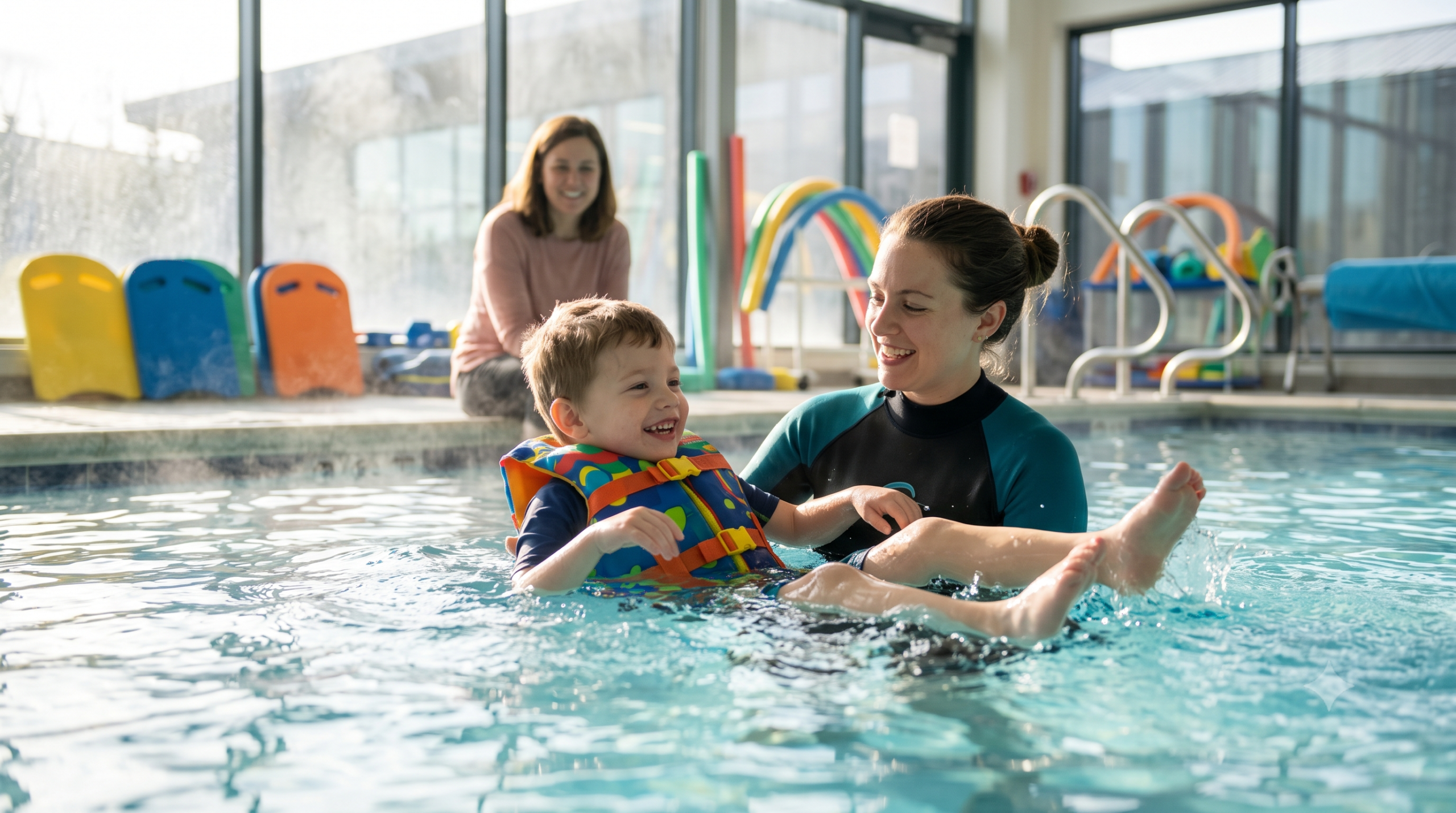
The answer is yes — hydrotherapy may support movement, strength, and physical activity in some children with cerebral palsy.
Hydrotherapy, also known as aquatic therapy, involves therapeutic exercises performed in water under professional supervision.
Water provides buoyancy, which reduces the effects of gravity and makes some movements easier. This can help children practise balance, coordination, muscle control, and functional movements in a supportive environment.
How Can Hydrotherapy Help?
Easier movement: Water supports the body, helping children practise selected movements with less weight-bearing.
Muscle relaxation: Warm water may help some children feel more relaxed and comfortable during exercise.
Balance and coordination: Guided activities can help children practise body control and movement.
Strength and flexibility: Tailored water-based exercises may support muscle strength and joint mobility.
Confidence and enjoyment: Water activities can make physical exercise more engaging for some children.
Is Hydrotherapy Suitable for Every Child?
Every child with cerebral palsy has different needs. Hydrotherapy should be tailored to the child’s movement abilities, medical needs, and therapy goals.
A qualified physiotherapist and the child’s medical team can help determine whether aquatic therapy is appropriate. Safe supervision is essential, particularly for children who have seizures, swallowing difficulties, breathing problems, or significant mobility challenges.
Remember: Hydrotherapy is a supportive therapy, not a cure for cerebral palsy. It should complement an individualised rehabilitation plan rather than replace other recommended therapies.
Frequently Asked Questions (FAQs)
1. Can swimming improve movement in children with cerebral palsy?
Swimming and guided aquatic exercises may help some children practise movement, balance, coordination, and strength. Results vary depending on the child’s individual needs and abilities.
2. Is hydrotherapy better than regular physiotherapy?
Not necessarily. Hydrotherapy and land-based physiotherapy offer different benefits. A combination may be helpful for some children, depending on their therapy goals and clinical assessment.
3. At what age can a child with cerebral palsy start hydrotherapy?
There is no single suitable age for every child. Readiness depends on developmental abilities, medical stability, water safety, and the availability of appropriately trained professionals.
4. Is hydrotherapy safe for children with cerebral palsy?
It can be appropriate when planned and supervised by trained professionals. Individual risks, including seizure control, swallowing difficulties, and respiratory concerns, should be assessed before starting.