


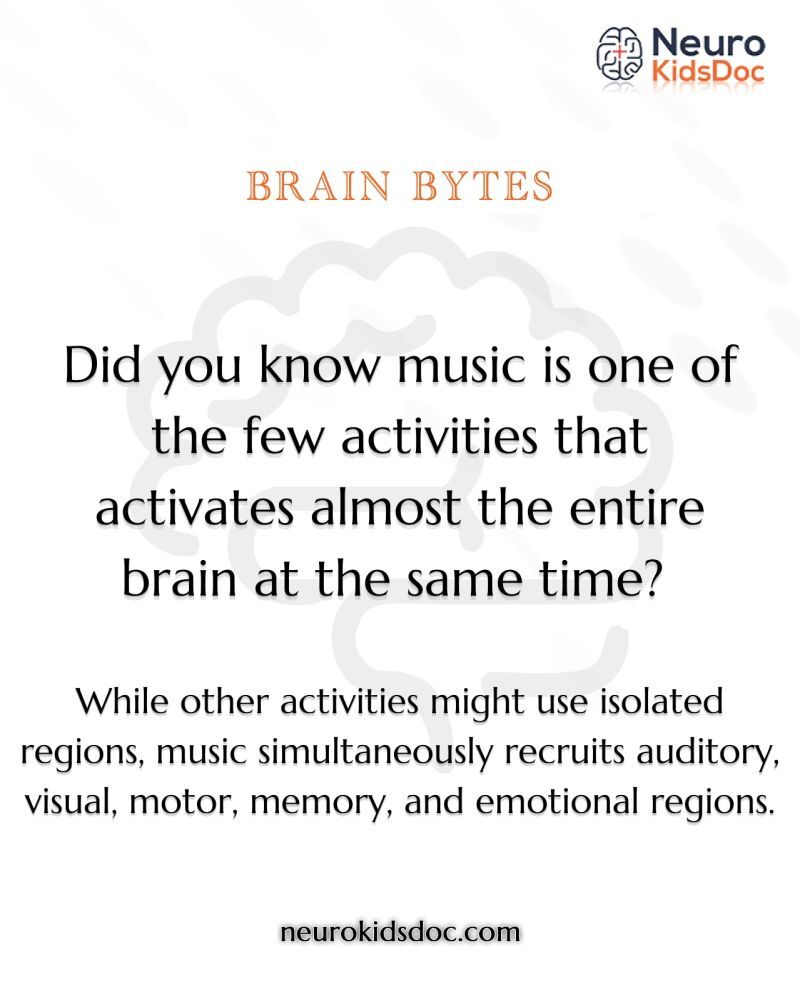
Active music learning is a true “whole-brain workout.”
When a child sings, claps to rhythm, or learns an instrument, the brain is doing far more than simply “enjoying music.”
Neuroscience research shows that music engages areas involved in memory, language, movement, emotion, attention, coordination, and creativity all at once.
And interestingly, regular musical engagement may help strengthen the corpus callosum, the bridge connecting the brain’s logical and creative hemispheres. Music also stimulates the hippocampus, an area deeply involved in learning and memory formation.
This is one reason early music exposure has been linked with better language development, improved attention, emotional regulation, and stronger pattern recognition and mathematical thinking.
But here’s something important for parents: the biggest brain benefits often come from active involvement, not just passive background music.
Simple things like singing together, clapping rhythms, dancing, playing simple instruments, or musical games can all help support healthy brain development.
The brain learns best when children actively participate. And sometimes, what looks like simple play is actually helping build powerful neural connections underneath.