


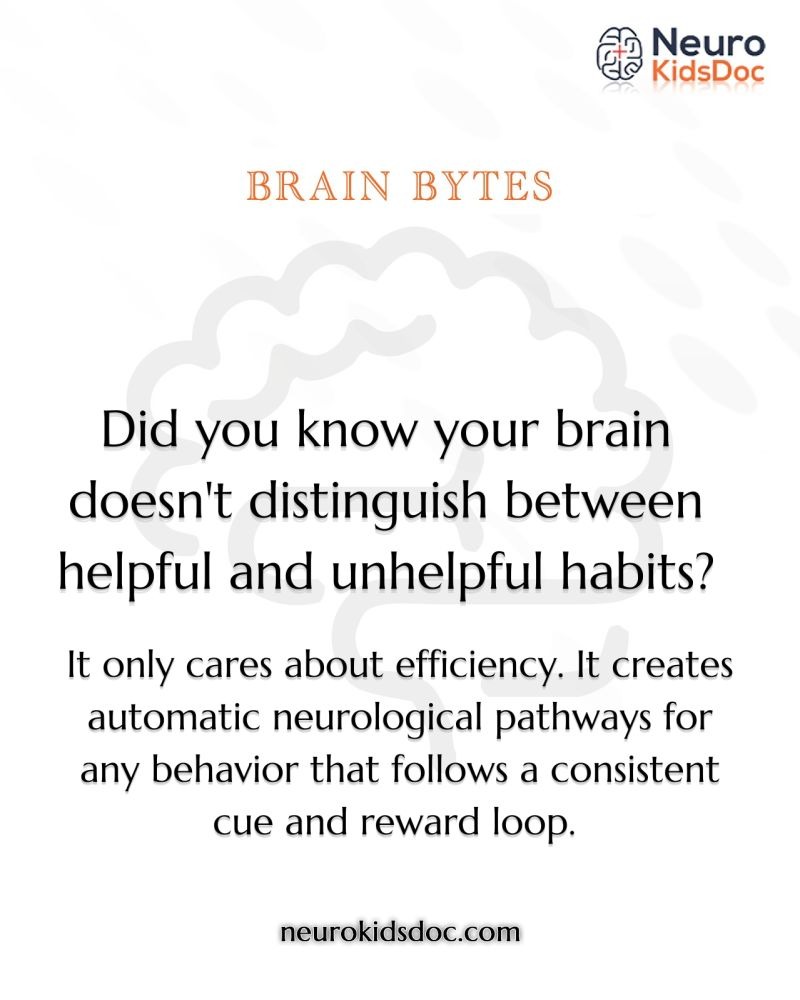
One of the biggest misconceptions about neuroplasticity is that it is always a positive thing.
In reality, neuroplasticity is value-neutral. It simply means the brain changes in response to experience.
The brain is constantly noticing, “What am I doing repeatedly?” And then it gets
better at that.
If you practise a musical instrument, the related neural pathways strengthen. If you learn a new language, those pathways strengthen too. But the same process can happen with less helpful patterns.
Repeated worry can strengthen worry circuits. Repeated avoidance can make avoidance feel easier and more automatic. Constant doom scrolling can train the brain to seek novelty and distraction.
Even negative self-talk, when repeated often enough, can become a well-travelled pathway that the brain accesses more easily.
Neuroscientists sometimes refer to this as maladaptive plasticity, the brain adapting, but in ways that may not serve us well.
The encouraging part is that the brain remains adaptable throughout life.
Every time we practise a new behaviour, challenge an old pattern, learn a skill, move our body, focus our attention, or engage in meaningful relationships, we are giving the brain new pathways to strengthen.
Neuroplasticity is not simply the brain’s ability to change. It is the brain’s tendency to become better at whatever it repeatedly experiences.
What are you teaching your brain to practise every day?
Concerned About Your Child’s Brain Development?
Understanding how the brain adapts is the first step toward supporting lifelong neurological health. If your child is experiencing developmental delays, epilepsy, autism, ADHD, learning difficulties, or other neurological concerns, early evaluation can make a meaningful difference.
Book a consultation with Dr. Aman PS Sohal, Child & Pediatric Neurologist in Dubai, and receive expert, personalized care for your child’s neurological well-being.