


If you’ve ever said this to a child who keeps tapping, rocking, humming, or fidgeting this is for you.
Did you know that stimming is not “bad behaviour”, it’s the brain trying to regulate itself?
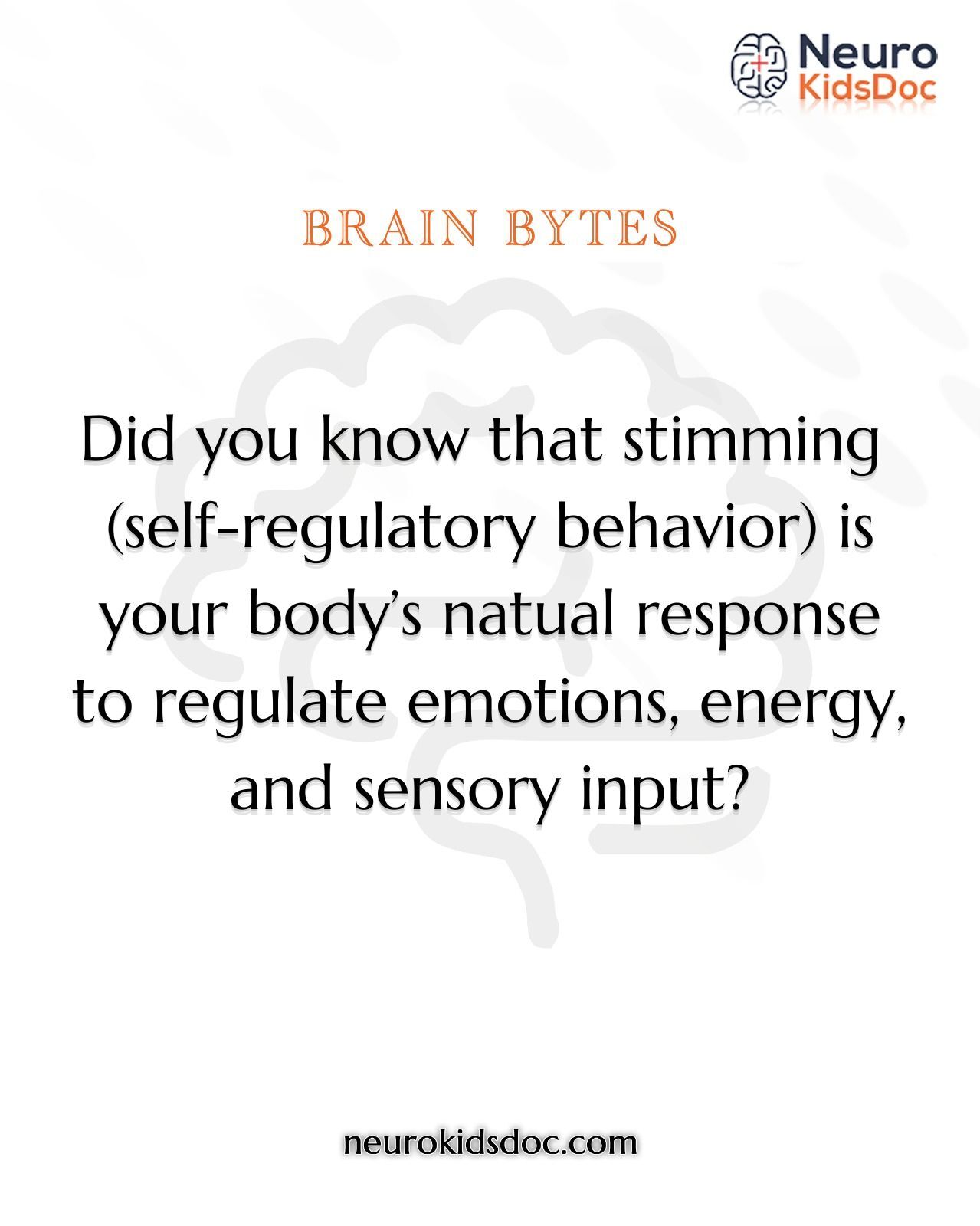
Stimming (self-regulatory behaviour) is the brain’s natural way of managing emotions, sensory input, energy levels, and stress.
While it’s often associated with autism and ADHD, the truth is, all of us stim in some way.
Think about it, tapping your foot during a long meeting, twirling your hair while thinking, biting your nails when anxious, pacing during a phone call, or doodling absent-mindedly.
These are not random habits. They are your brain’s way of staying balanced.
For many neurodivergent children, stimming can be even more important. It helps them feel calmer in overwhelming environments, process sensory input, focus better, and release built-up energy.
When we try to stop stimming without understanding it, we may be taking away a coping tool, not correcting a behaviour.
That doesn’t mean all stimming should be ignored. If a behaviour is unsafe or disruptive, it can be gently redirected. But the goal should always be support, not suppression.
Instead of asking, “How do I stop this?” Ask, “What is my child’s brain trying to manage right now?” Because very often, behaviour is communication.
And when we understand the why, our response becomes calmer, kinder, and far more effective.
Have you noticed yourself or your child doing small repetitive actions during stress or focus?