


The Gut-Brain Connection: How Your Child’s Gut Health Can Influence Brain Development, Mood, and Learning
As a pediatric neurologist, one of the questions I hear more often today is, “Can gut health really affect the brain?”
It may sound surprising at first, but the answer is yes, although perhaps not in the way social media sometimes suggests.
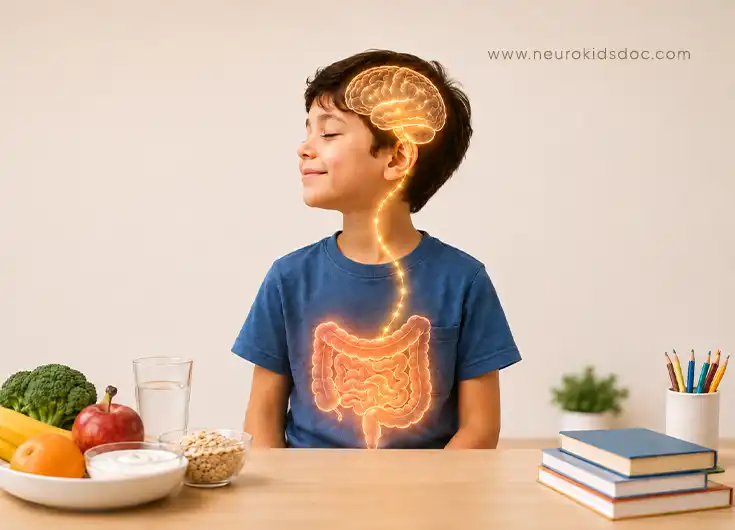
The relationship between the brain and the gut is one of the most fascinating areas of modern neuroscience. Scientists now know that these two organs are constantly communicating with each other through what is known as the gut-brain axis.
While there is still much to learn, research has clearly shown that this communication plays an important role in digestion, stress responses, mood, immune function, and brain development.
Your child’s brain and gut are always talking
Most of us have experienced “butterflies in the stomach” before an important event or noticed a child complaining of a stomach ache when they are anxious about school.
These are everyday examples of the gut-brain connection at work.
Communication between the brain and the digestive system happens in both directions. The brain influences how the gut moves and functions, while the gut continuously sends information back to the brain about what is happening inside the body.
One of the main pathways responsible for this communication is the vagus nerve, the longest cranial nerve in the body. You can think of it as a communication highway carrying messages between the brain and many organs, including the stomach and intestines.
The gut is more than a digestive organ
Inside the digestive tract lives a vast community of bacteria, viruses, fungi, and other microorganisms known collectively as the gut microbiome.
Although these microbes are tiny, together they perform remarkable jobs. They help digest certain foods, produce vitamins, generate beneficial compounds called short-chain fatty acids, and interact closely with the immune system. They also influence many of the signals travelling along the gut-brain axis.
Many parents have also heard that “90% of serotonin is made in the gut.” This statement is broadly true, but it is often misunderstood.
Most of the body’s serotonin is produced in the digestive system, where it primarily helps regulate intestinal movement and digestion. It does not simply travel into the brain to change mood. Instead, the gut and brain communicate through several pathways, including the vagus nerve, immune signalling, hormones, and microbial metabolites.
Why does this matter for children?
Early childhood is an extraordinary period of development.
The brain, immune system, and gut microbiome are all developing rapidly during the first few years of life. Researchers believe this makes early life an important window during which the gut-brain axis may influence long-term health.
Studies have found associations between changes in the gut microbiome and conditions such as autism spectrum disorder, ADHD, anxiety, and depression.
However, this is where it is important to separate evidence from headlines.
At present, scientists cannot say that changes in the microbiome directly cause these conditions. It is equally possible that neurological conditions influence gut function, that gut changes influence the brain, or that both are affected by other biological factors. The relationship is complex, and research is ongoing.
The gut-brain connection extends throughout life
The gut-brain axis is not only important in childhood.
Researchers have observed that many adults with Parkinson’s disease experience gastrointestinal symptoms, particularly chronic constipation, years before movement symptoms appear. This has led scientists to investigate whether early changes in the gut may contribute to disease processes or serve as early markers of neurological disease.
While these findings are exciting, they are still being actively studied, and many questions remain unanswered.
Supporting a healthy gut and a healthy brain
Although there is no single food or supplement that guarantees better brain health, there are several habits that consistently support both the gut and the developing brain.
A varied diet rich in fruits, vegetables, whole grains, legumes, and other fibre-rich foods helps nourish beneficial gut bacteria. Regular physical activity, adequate sleep, good hydration, and managing stress also contribute to a healthier gut-brain axis.
Parents often ask about probiotics.
Current research is promising in certain gastrointestinal conditions, but there is no universal probiotic that has been proven to improve neurological development or prevent neurological disorders in otherwise healthy children. Any supplementation should be discussed with your child’s healthcare provider.
A final thought
One of the most exciting discoveries in neuroscience is that the brain does not work alone.
It is in constant conversation with the rest of the body, including the gut.
The gut-brain connection reminds us that brain health is about much more than memory or learning. It is influenced by nutrition, sleep, movement, emotional wellbeing, and overall physical health.
As research continues to evolve, one message remains remarkably consistent: caring for the whole body is one of the best ways to support the developing brain.