



Some children walk into school carrying more than just a school bag.
They may seem “normal” on the outside. But parents often notice things like low self-esteem, complaints of stomach aches, or a sudden reluctance to go to school.
This makes one wonder, “If seizures are under control, why is my child still uncomfortable?”
What many families are navigating is something I often describe as an invisible backpack, i.e., the invisible load children carry. Read this blog to find out more about this.
Beyond Seizures: Helping Kids Cope
Epilepsy is not only about seizures. For a child, it also brings a layer of uncertainty.
They may worry about having a seizure in class, about what their friends or peers might think.
To add to this, there are other aspects, like potential side effects from medication, fatigue or slower processing, difficulty keeping up academically, or simply feeling “different.”
All of this adds weight. And because it’s not easily visible, it’s often misunderstood.
Why Children with Epilepsy May Experience Anxiety
Research shows that children with epilepsy are more likely to experience anxiety compared to their peers.
Part of this is neurological. The same brain systems involved in seizures, especially areas linked to emotion and memory, can also influence how a child processes stress and uncertainty.
But there’s also a psychological side to this, i.e., unpredictability. When the brain learns that something can happen without warning, it becomes more alert. Over time, this can lead to a constant “what if” state, even on good days.
How Anxiety Shows Up in School
Children don’t always say, “I feel anxious”, in so many words, but there are subtle signs.
You may notice things like
- Reluctance or refusal to go to school
- Frequent physical complaints like headaches or stomach aches
- Irritability or emotional outbursts
- Difficulty concentrating
Why the School Environment Matters
A child’s anxiety stems from uncertainty and is soothed with a predictable, supportive, and calm environment.
Small things can make a big difference:
- Teachers who understand epilepsy
- A clear seizure action plan
- A trusted adult that the child can go to
- Classmates who are informed in a simple, age-appropriate way
- Treating the child with empathy and care
When a child knows, “If something happens, I will be okay,” they feel calmer and safe.
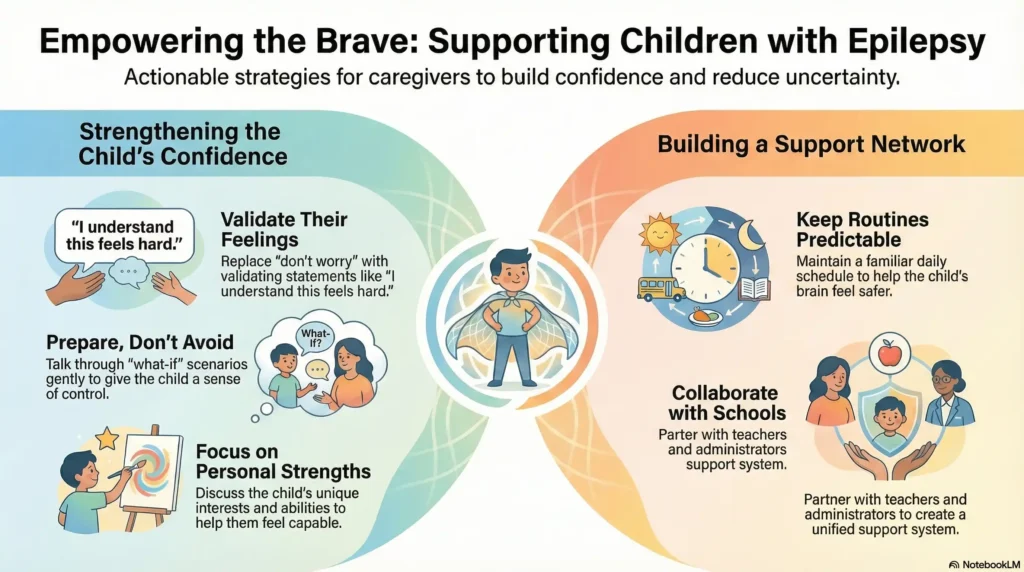
What Can Help?
Supporting a child with epilepsy involves reducing uncertainty and building confidence.
Here are a few helpful ways:
1.Prepare, don’t avoid
Talk through situations gently. “If you feel unwell in class, what can you do?” This builds a sense of control.
2.Keep routines predictable
The brain feels safer when the day looks familiar.
3.Validate feelings
Instead of saying, “Don’t worry,” try, “I understand this feels hard.”
4.Work with the school
Have a conversation with teachers and the school administration to better support the child.
5.Focus on strengths
Children need to feel capable, and talking to them about their strengths and interests can help them.
Balancing Support and Independence
One of the most delicate parts of parenting a child with epilepsy is knowing how much to step in, and when to step back. Overprotection can unintentionally increase anxiety. But mindful support builds confidence.
The goal is not to remove all challenges. It is to help the child feel, “I can handle this.”
When Should You Seek Support?
If anxiety is persistent, affecting sleep or learning, leading to school refusal, or becoming more intense over time, it’s worth seeking guidance.
This doesn’t always mean medication. Often, it means understanding triggers better and building the right support system around the child.
Summing Up
Children with epilepsy are not just managing a medical condition. They are experiencing “big” feelings and emotions, social experiences, and their own sense of safety in the world. And, when we recognise the invisible load they carry, our response changes, from frustration to understanding.
If your child seems anxious about school despite “everything being under control,” trust what you’re seeing. You don’t have to handle this alone. With the right support, children with epilepsy can feel confident, safe, and fully included in their school journey.
Connect with Dr. Aman PS Sohal, a leading pediatric neurologist in Dubai, for supporting your child through specialized care for epilepsy, ADHD, and autism.