


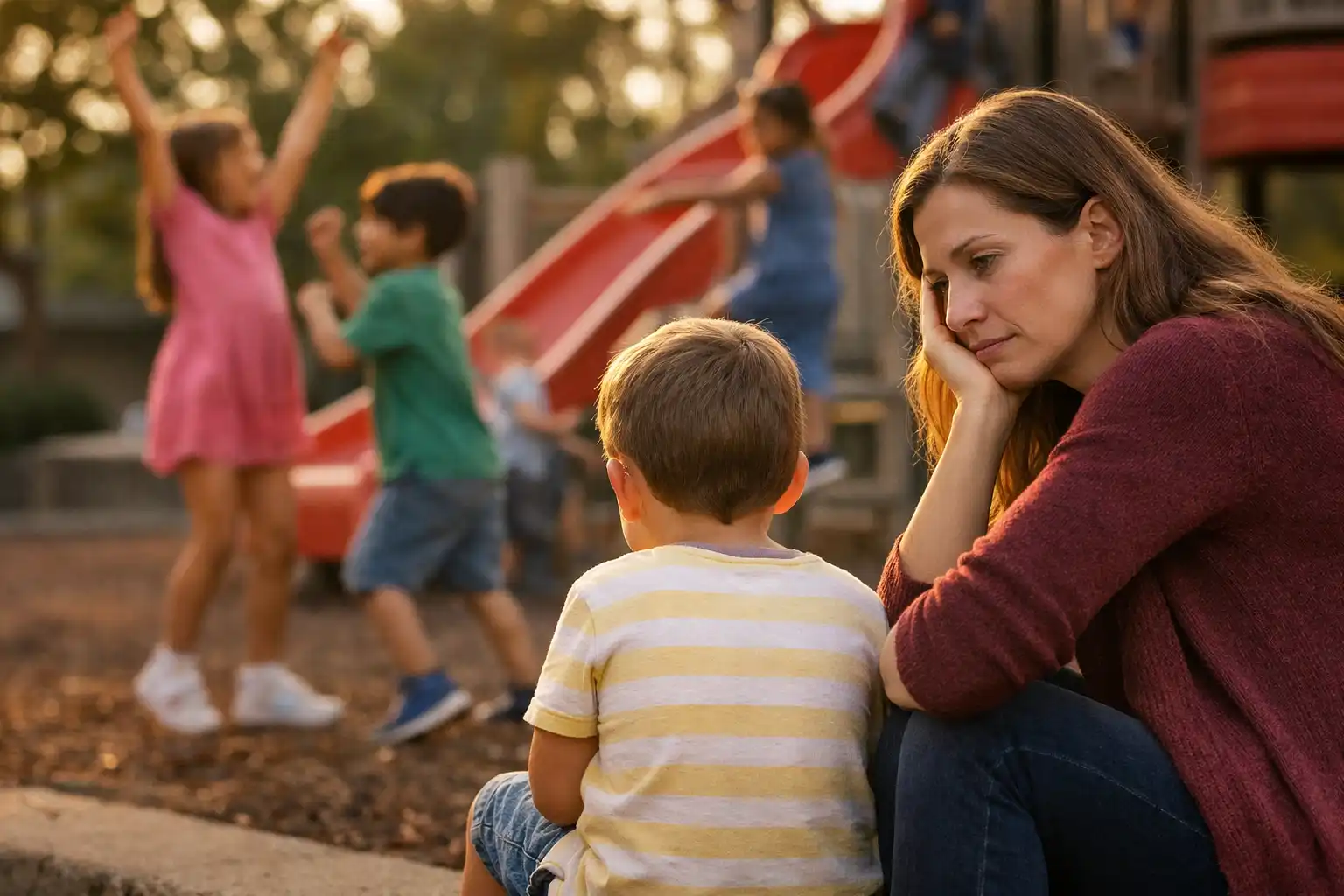
“Why is my child not doing what other children their age are doing?”
Almost every parent has had this thought at some point. Maybe at a birthday party. Maybe at school pickup. Maybe while scrolling online and seeing milestone posts from other families.
If you’ve ever compared your child’s progress to someone else’s, please know this: it doesn’t mean you’re failing as a parent. Comparison usually comes from care, concern, and the desire to do what’s best.
But what many parents don’t realise is that constant comparison can have a high cost, one that affects a child in more ways than one.
Why Comparison Feels Unavoidable
Children grow up surrounded by expectations. Schools have age-based goals. Friends and relatives talk about milestones. Social media constantly shows children reading early, speaking fluently, sitting still, or excelling at something.
It’s natural to wonder where your child fits in.
But the brain doesn’t develop according to a single schedule. And it certainly doesn’t respond well to pressure created by comparison.
The Truth About Brain Development
Brain development is not linear.
Think of the brain like a city under construction. Some areas finish early. Others take longer. And many are being built at the same time.
Language, emotional regulation, attention, motor skills, and social understanding all develop at different speeds, even within the same child.
One child may speak early but struggle with focus. Another may be physically coordinated but emotionally sensitive. Another may develop skills later and then make sudden leaps forward.
This variability is not a problem. It’s normal neurodevelopment.
What Constant Comparison Does To A Child’s Brain
When children sense that they’re being measured against others, even unintentionally, their nervous system responds.
Comparison can activate stress responses in the brain. Over time, this can:
- reduce confidence and motivation
- increase anxiety or emotional withdrawal
- make learning and regulation harder
A brain that feels “behind” often shifts into self-protection instead of growth.
This is especially true for children with ADHD, autism, learning differences, or sensory sensitivities. Their developmental paths are already unique, and comparison adds unnecessary pressure.
Milestones Are Ranges, Not Deadlines
Developmental milestones are often misunderstood.
They are averages, not rules. They help professionals know when to observe, not when to panic.
For example:
- Walking anywhere between 9 and 18 months can be typical.
- Language development can vary widely and still be healthy.
- Emotional regulation is one of the last brain systems to mature.
Being late does not mean being wrong. Being different does not mean being deficient.
When Comparison Becomes Unhelpful
Comparison becomes harmful when it:
- creates pressure instead of curiosity
- leads to constant correction
- overshadows a child’s strengths
- increases parental anxiety rather than clarity
There is a big difference between noticing patterns and measuring worth.
Noticing patterns helps us support children. Measuring children against peers often steals joy from both the parent and child.
What Helps Instead: A Brain-Friendly Mindset
Here’s what I encourage parents to focus on instead:
- Watch your child’s own progress, not someone else’s timeline.
- Celebrate effort, not speed.
- Support emotional safety before performance.
- Look for patterns over time, not single moments.
- Ask questions early, without panic or self-blame.
Every child’s brain unfolds at its own pace.
Reminder for Parents
Children are not racing toward a finish line. They are growing along individual paths shaped by their brains, experiences, and environments. When we shift from comparison to understanding, we create space for confidence, regulation, and growth.
If you’ve been worrying that your child isn’t “keeping up,” you’re not alone. Let’s talk about how to support development without rushing it.