


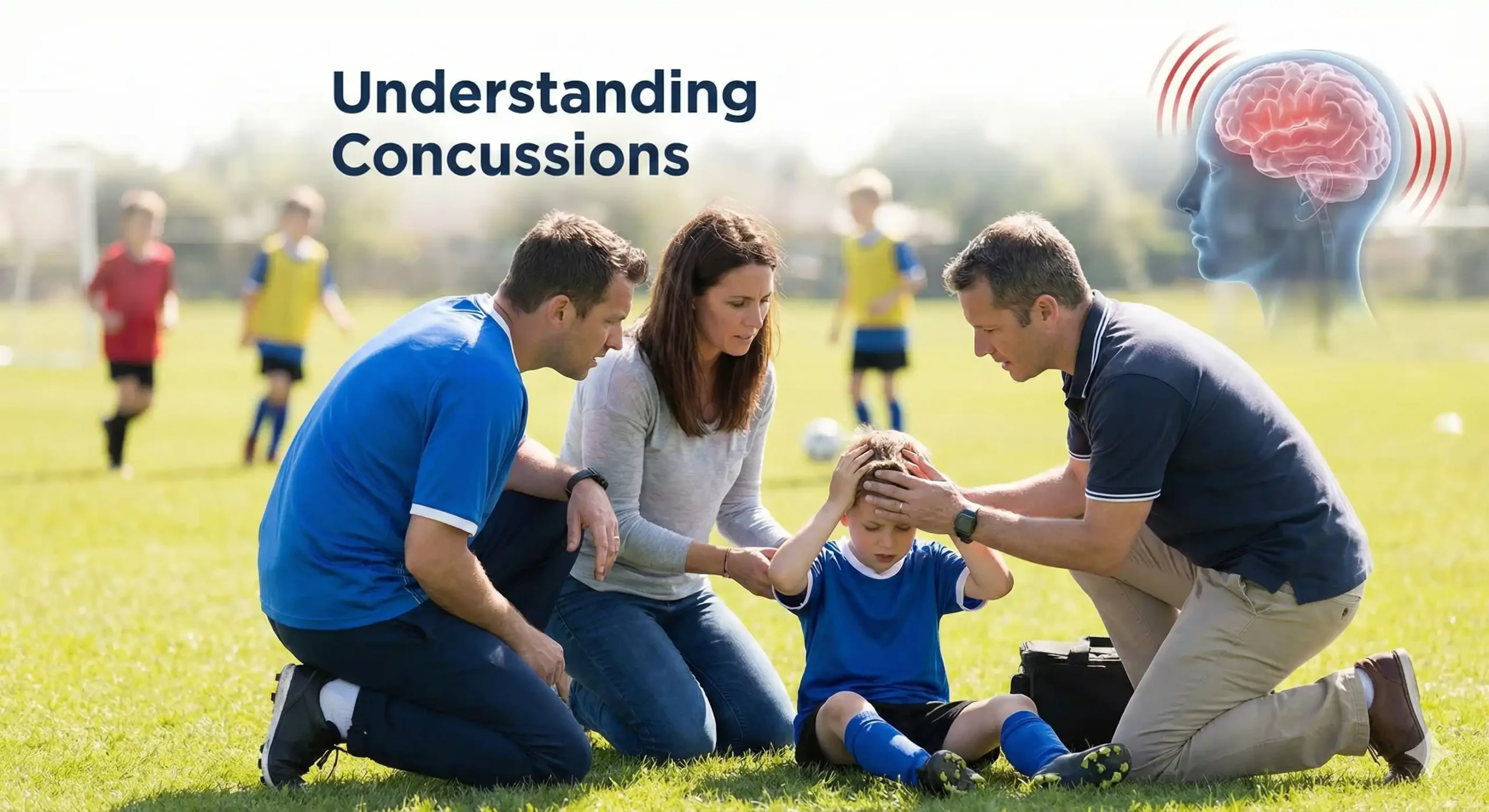
What Is a Concussion?
A concussion is a type of mild traumatic brain injury that commonly occurs in children during sports, especially contact sports, when something hits their head. When this happens, the brain moves inside the skull, which can cause shearing injuries to the surface of the brain.
Symptoms of Concussion
A concussion can lead to symptoms such as headache, vomiting, and sometimes even loss of consciousness. There can be several other problems as well, which I will discuss in this video.
Interestingly, when we perform brain scans on children with concussion, the results often come back as normal. This is because a concussion affects brain function more than brain structure.
How Sports Lead to Concussion
Let’s look at what medical research says. One major review analyzed 116 studies involving over 3 million young athletes. It found that:
- The overall sports-related concussion rate was about 1.4 per 1,000 athletic exposures
- And 4.4 per 1,000 player-hours
Concussion can affect learning, mood, long-term brain health, and sleep.
- Another study looked at around 4,500 children aged 5 to 18 years. It found that:
- About 67% reported new sleep problems after a concussion
Within the first 20 days of injury, children and teens who had changes in sleep had a 38% higher chance of taking more than 28 days to recover
Which Sports Carry the Highest Risk?
Collision sports such as rugby, American football, and ice hockey are believed to have the highest rates of concussion.
Actual games are more dangerous than training sessions because during training, children know what to expect and tend to be more cautious. Most concussion injuries usually happen during real matches rather than practice.
Practical Advice for Parents
If your child has had a head injury and is complaining of:
- Dizziness
- Vomiting
- Headache
- Sleep problems
You should consult a neurologist as soon as possible, as these could be signs of a concussion.