

When people think about ADHD, they often think about attention difficulties, hyperactivity, or impulsive behaviour. But many parents who sit across from me in clinic are not talking primarily about focus. They’re talking about emotions.
They tell me: “My child gets upset so quickly.”
“Small disappointments turn into huge reactions.”
“Once they’re upset, it’s very hard for them to calm down.”
One of the most overlooked aspects of ADHD is something called emotional dysregulation.
ADHD is not just about attention
ADHD affects a group of brain functions known as executive functions. These are the skills that help us plan, organise, focus, manage impulses, and regulate behaviour. What many people don’t realise is that emotional regulation is also an executive function.
In other words, the same brain systems that help a child pause before acting also help them pause before reacting emotionally. When those systems are still developing or functioning differently, emotions can feel much harder to manage.
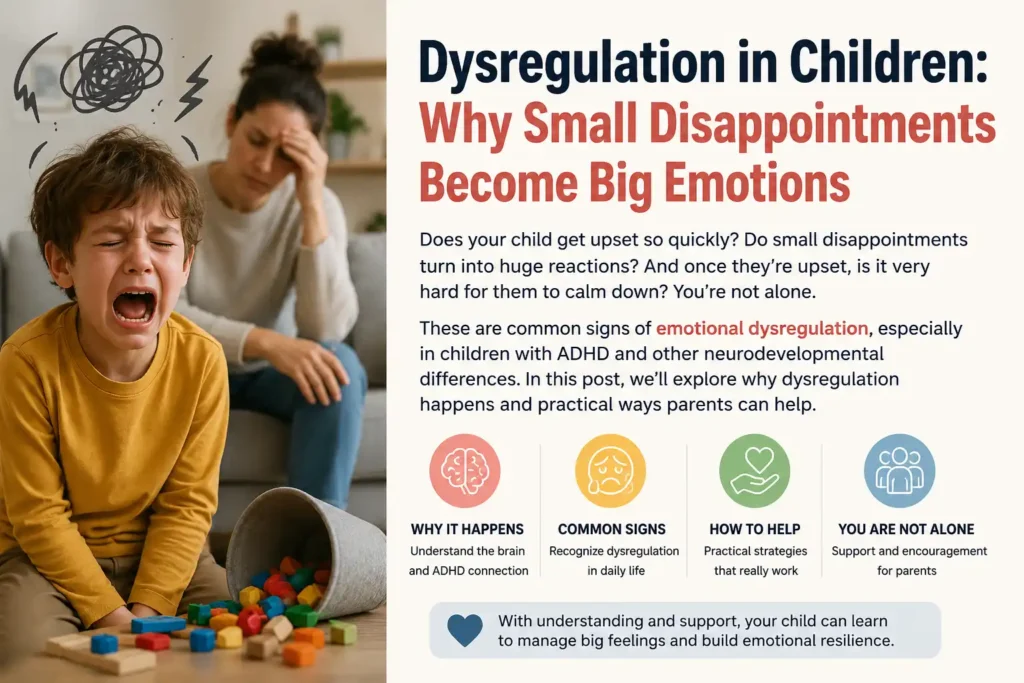
What is emotional dysregulation?
Emotional dysregulation does not mean a child has more emotions than other children. It means they may have more difficulty managing those emotions once they appear.
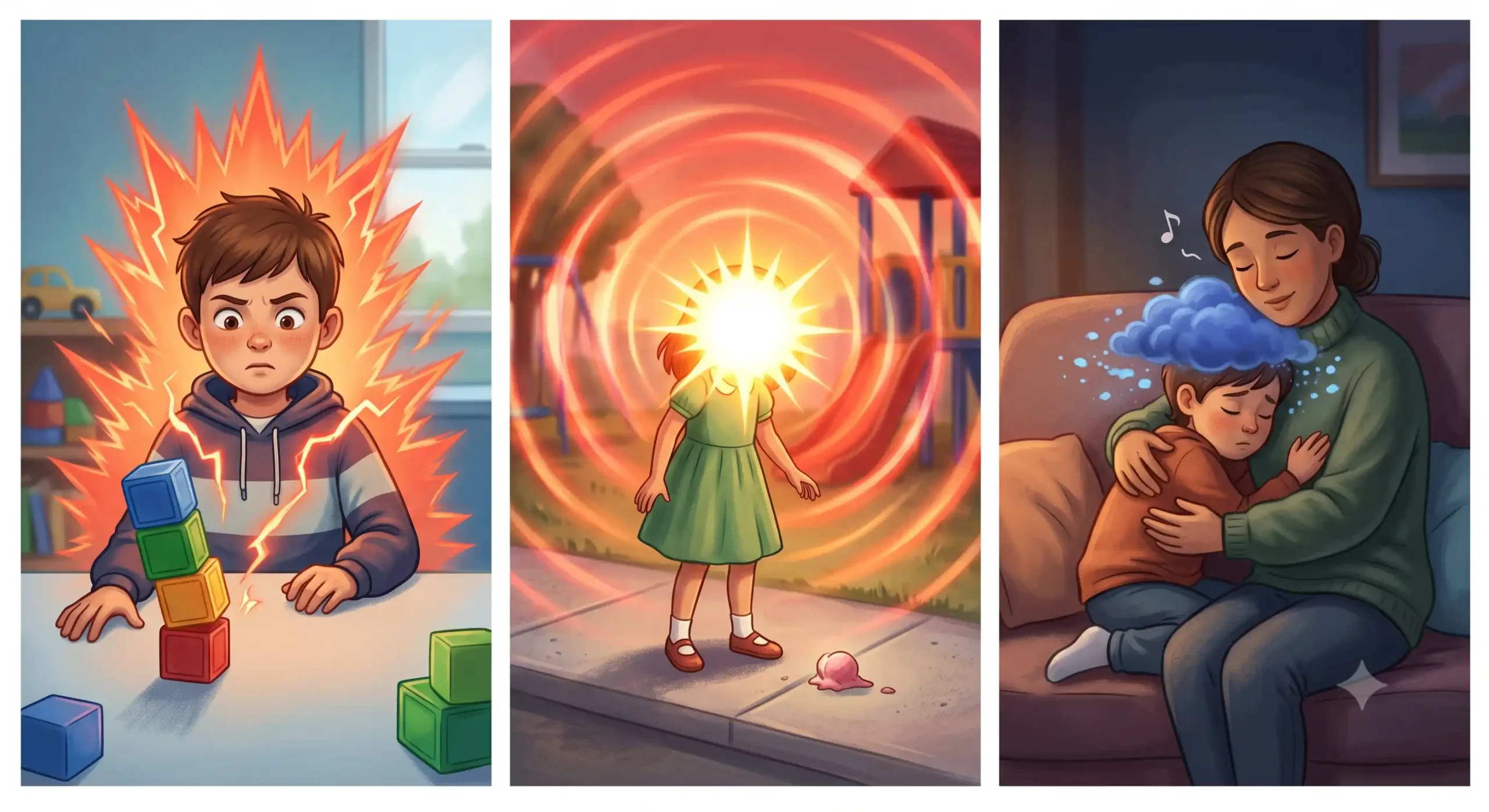
Imagine emotions as waves. Most people experience a wave, feel it rise, and gradually settle..For some children with ADHD, the wave arrives faster, feels bigger, and takes longer to come back down.
This can make everyday frustrations feel overwhelming. For instance, a game not going as expected, or a change in plans. Events that seem small from the outside can feel much bigger inside the child’s nervous system.
What does the research tell us?
Over the past decade, research has increasingly recognised emotional dysregulation as a significant feature of ADHD.
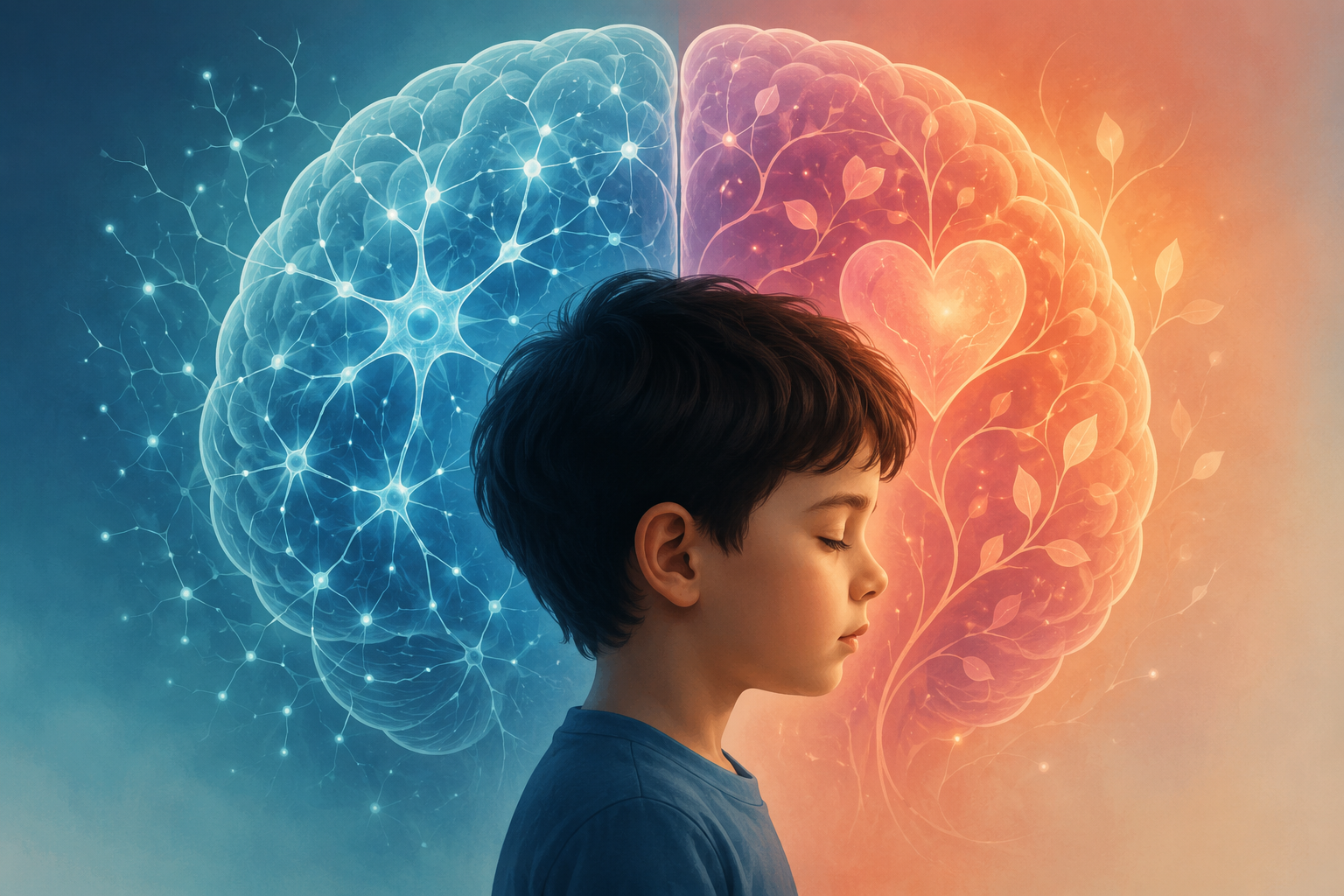
Brain imaging studies suggest differences in networks involving the prefrontal cortex, which helps regulate behaviour and emotions, and the amygdala, which plays an important role in processing emotional responses.
Researchers have also identified differences in neurotransmitter systems involving dopamine and norepinephrine, chemicals that help regulate attention, motivation, and emotional control.
In simple terms, the brain’s “emotion accelerator” may be working harder than its “emotional brakes.”
This is not a matter of laziness, poor parenting, or lack of effort. It is a reflection of how the brain is processing and regulating emotional information.
How emotional dysregulation may look in everyday life
Every child is different, but some common signs include:
- Strong reactions to disappointment
- Low frustration tolerance
- Difficulty accepting “no”
- Intense emotional outbursts
- Rapid shifts in mood
- Difficulty moving on after upsetting experiences
- Becoming overwhelmed by criticism or perceived rejection
Parents often describe these children as being emotionally sensitive. That sensitivity is biological.
Why punishment alone often falls short
When a child is emotionally overwhelmed, the thinking parts of the brain become less accessible.
This is true for adults too. Most of us do not learn effectively when we are highly distressed.
Children with ADHD often need support regulating first before they can reflect, problem-solve, or learn from the situation. This is why connection and co-regulation are often more effective than repeated lectures during emotional moments.
The goal is not to remove boundaries. It is to help the child access the brain systems needed to learn from them.
What helps?
There is no single solution, but several approaches consistently help.
- Predictable routines reduce uncertainty and lower emotional load.
- Adequate sleep supports emotional regulation and executive functioning.
- Regular physical activity helps regulate stress systems and improves mood.
- Teaching emotional vocabulary helps children identify and communicate feelings before they become overwhelming.
- Most importantly, children benefit from calm adults who can help them regulate during difficult moments.
Over time, these repeated experiences help strengthen emotional regulation skills.
A final thought
If your child has ADHD and struggles with big emotions, it is important to remember that these reactions are not a reflection of character, but regulation.
The child who melts down over a small disappointment is not necessarily being difficult. They may simply be struggling with skills that are still developing.
With understanding, support, and the right strategies, emotional regulation can improve significantly over time.
And perhaps one of the most important things a child can hear during these moments is this: “I can see you’re having a hard time. Let’s work through it together.”
If you’re looking for guidance for your child, reach out to Dr. Aman PS Sohal, leading pediatric neurologist in Dubai.