

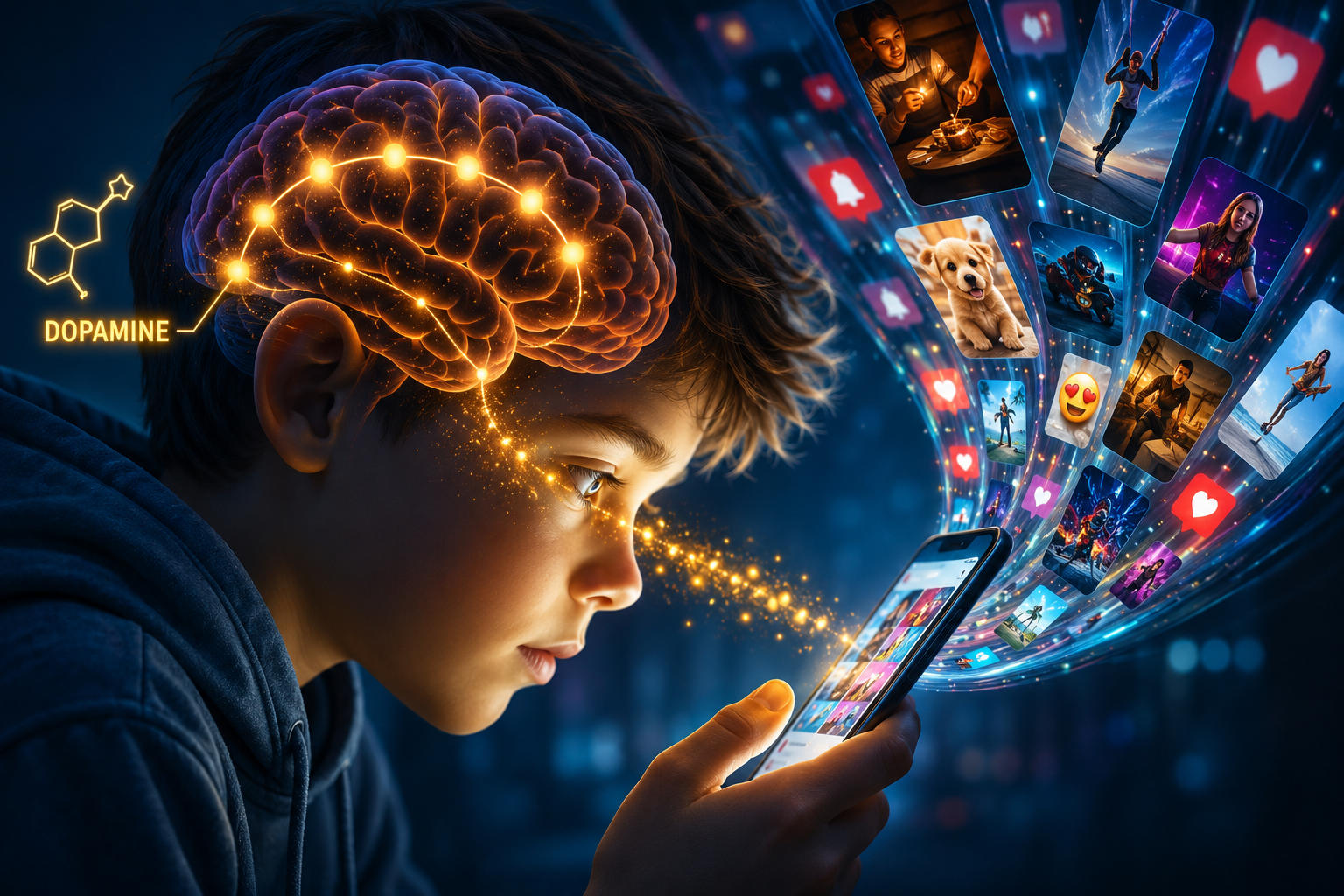
You pick up your phone to quickly check one message…and somehow twenty minutes disappear. One reel becomes ten. One notification leads to endless scrolling before you even realise it.
So if you’ve been wondering why screens feel so difficult to put down, for children and adults, the answer is not simply “lack of discipline.”
A lot of it comes down to how the brain is wired. Let’s understand this now.
Dopamine is not just the “pleasure chemical”
One of the biggest misunderstandings about dopamine is that it only creates pleasure. Dopamine is much more about anticipation, motivation, and pursuit.
The brain releases dopamine not only when we receive a reward, but often when we are expecting one.
That anticipatory feeling of ‘maybe the next video will be interesting’, or ‘maybe someone texted me,’ is what keeps the brain searching.
And digital platforms are designed extremely well around this loop.
Why scrolling feels endless
Social media, reels, games, and notifications work on a concept called a variable reward system.
The brain never fully knows when the next rewarding moment will come.
Sometimes the next post is boring. It might be funny, emotional, surprising, or exciting.
That unpredictability keeps the brain engaged.
Over time, the nervous system begins getting used to constant novelty; the constant movement,
constant stimulation, and the constant “next.”
And when this becomes the brain’s normal pace, quieter parts of life can begin feeling unusually slow.
Take a Pause: When we are disconnected from screens, time often feels slower and more noticeable. A few quiet minutes can feel long. But during endless scrolling or streaming, hours can disappear without us even realising it.
That’s because digital stimulation pulls the brain into a constant cycle of novelty and anticipation, making us lose track of time far more easily than we think.
When the brain becomes overstimulated
Children become restless more quickly. Homework feels harder to sustain. Reading feels “boring.” Sitting quietly without reaching for a screen becomes uncomfortable.
And, adults experience this too. Many people now find it difficult to simply wait, pause, or sit with their thoughts without automatically reaching for stimulation.
This does not mean the brain is damaged. It means the brain has adapted to fast rewards and constant input. The brain strengthens what we repeatedly use.
The brain also needs boredom
This is something I wish more people understood. Boredom is not bad for the brain. In fact, some boredom is incredibly important.
It is often during quiet moments that the brain begins to process emotions, build creativity, strengthen attention, problem-solve, and regulate itself naturally.
When every free moment is immediately filled with stimulation, the nervous system gets fewer opportunities to slow down and reset.
What may look like “doing nothing” is actually important brain work happening silently in the background.
Why this matters even more for children and teenagers
Children’s brains are still developing. The parts of the brain involved in reward and emotion mature earlier than the systems responsible for impulse control and long-term regulation.
Which means younger brains are naturally more sensitive to reward-seeking and novelty.
That is one reason screens can feel especially hard for children and teenagers to step away from.
It is not simply about “bad habits.” It is biology interacting with technology that is designed to hold attention.
This is also why slower, effort-based experiences become important. Activities like outdoor play, movement, sports, reading, art, conversation, and creative hobbies help the brain build deeper attention, patience, and emotional resilience with practice.
Helping the brain find balance again
This is not about eliminating technology or making you feel guilty. Screens are now part of modern life for both adults and children. The goal here is not perfection; it is awareness, balance, and healthier rhythms.
What helps the brain most is not extreme restriction, but creating more space for real-world experiences alongside digital ones.
Some simple things that support the nervous system:
- Taking small breaks from screens during the day
- keeping phones away during meals or conversations
- spending more time outdoors and moving the body
- allowing moments of boredom instead of filling every second
- protecting sleep by reducing screens before bedtime
- making room for slower activities like reading, hobbies, art, or play
And perhaps most importantly, noticing our own habits too. Children learn not only from what we tell them about screens, but from how we use them ourselves.
Reminder
Dopamine isn’t the enemy. It’s an essential engine for motivation, curiosity, and growth. Without this vital neurotransmitter, we would lack the drive to pursue anything meaningful.
But the brain was never designed for endless stimulation without pause.
From time to time, your nervous system needs space to recover. And often, the healthiest thing we can give both ourselves and our children is not more stimulation, but a little more real-life joy.
For parents reading this
If you’re noticing changes in your child’s attention, sleep, emotional regulation, or relationship with screens, you are not alone. These are conversations many families are navigating today.
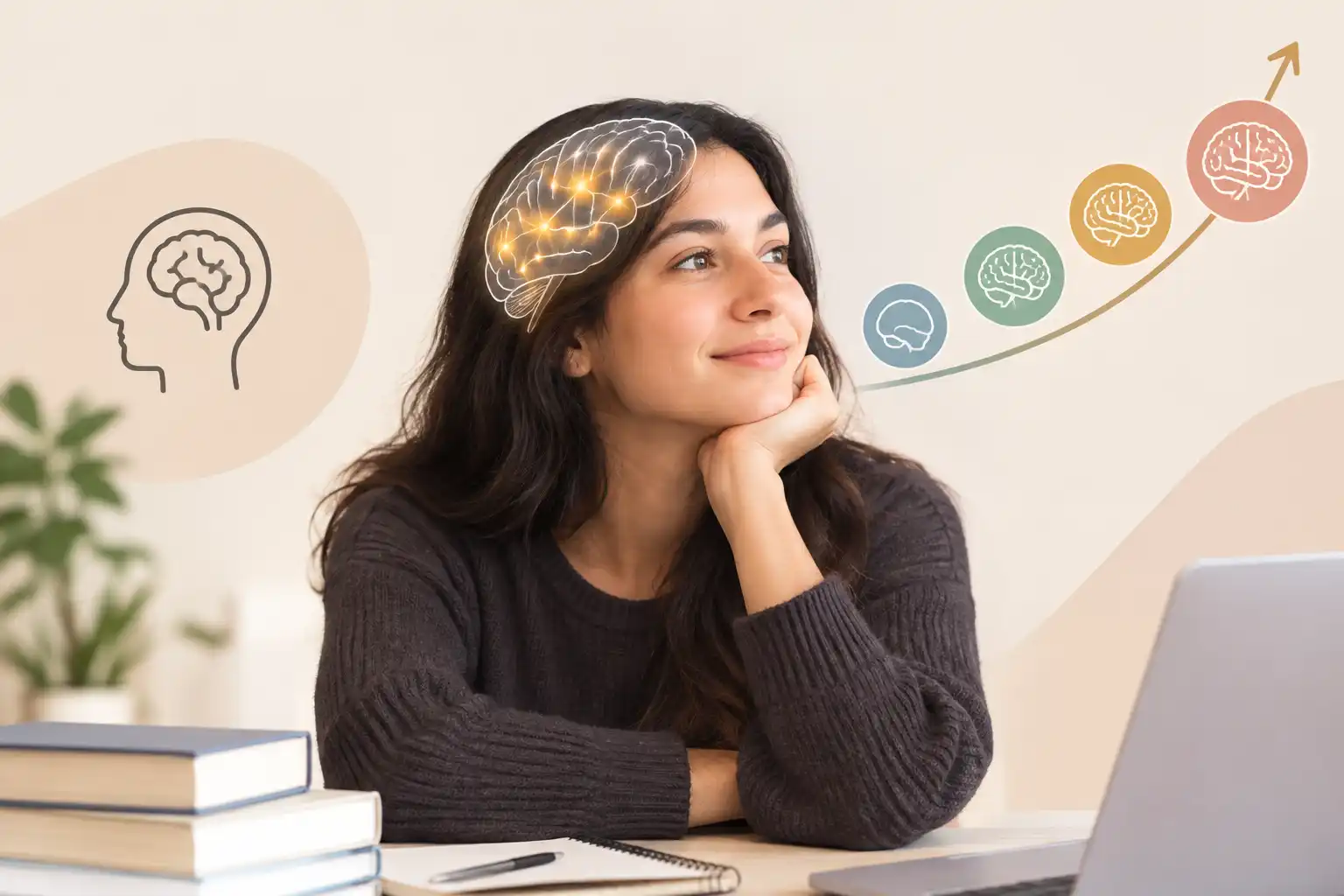
And the encouraging part is that the brain remains adaptable throughout life.
With the right balance, support, and routines, healthier attention patterns can be rebuilt. If you’re concerned about your child’s focus, behaviour, or screen habits, you can always reach out to discuss what may help support their developing brain best.